
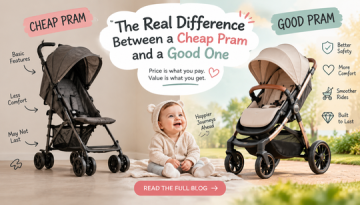
Walk into any baby store or scroll through any online pram listing and you’ll notice something straight away. Prices for baby prams in Australia can range from under a hundred dollars to well over a thousand, and on the surface, a lot of them look almost identical. Four wheels, a seat, a canopy, done.
So what actually separates a cheap pram from a genuinely good one? We get asked this constantly, usually by first time parents trying to figure out if spending more is actually worth it, or if it’s just clever marketing. After years of helping families choose the right pram, here’s our honest, practical breakdown.
It’s Not About the Price Tag, It’s About What’s Underneath It
The truth is, price alone isn’t a reliable indicator of quality. You can absolutely overpay for a pram with a fancy brand name and average build quality, just like you can find a genuinely well made, budget friendly baby pram if you know what to actually look for.
The real differences show up in a few key areas.
1. Frame Strength and Build Quality
Cheaper prams often use lighter, thinner metal frames to cut manufacturing costs. They might feel fine in the shop, but after a few months of daily use, footpaths, curbs, and being folded and unfolded constantly, weaker frames start to develop wobble, squeaks, or worse, structural give.
A good baby pram uses a sturdier frame built to handle real, everyday Australian conditions, from suburban footpaths to shopping centre floors to the occasional gravel path at the park. If you’re comparing a 3 in 1 baby pram or a 9 in 1 baby pram set, this is one of the first things worth checking, since these convertible systems put extra strain on the frame as they shift between bassinet and stroller modes.
2. Wheel Quality and Suspension
This is where a lot of budget models cut corners without you noticing straight away. Cheap plastic wheels with minimal suspension might feel okay on smooth tiles, but they transmit every bump straight through to your baby on real world surfaces.
A properly built pram uses wheels designed for genuine shock absorption, which matters more than most new parents expect until they’re pushing a pram over uneven pavement with a sleeping newborn inside.
3. Safety Features That Actually Matter
Every pram sold in Australia needs to meet basic safety standards, but “meeting the minimum” and “genuinely safe” aren’t always the same thing in practice. Things worth checking include a proper 5 point safety harness, reliable brakes that lock securely, and a frame that won’t collapse or shift unexpectedly.
If you’re researching how to choose a safe baby pram, this is genuinely the most important section to focus on, more than colour, brand, or extra accessories.
4. How It Grows With Your Baby
This is one of the biggest differences between a cheap, single purpose stroller and a well designed convertible pram. Many affordable baby prams on the market today are built as 3 in 1 or 9 in 1 systems, meaning they convert from a newborn bassinet through to a full push chair as your baby grows.
A poorly made version of this concept often uses flimsy connectors and tricky, ill fitting adapters. A good one converts smoothly, locks securely at each stage, and genuinely lasts from newborn through to toddler without needing to be replaced twice.
5. Long Term Value, Not Just Upfront Cost
Here’s the part that surprises a lot of parents. A cheaper pram that needs replacing within a year often ends up costing more overall than a slightly higher upfront investment in a well built, budget friendly baby pram that actually lasts.
This is really the heart of the cheap versus good debate. It’s less about spending more, and more about spending smart.
Baby Pram or Baby Stroller? Does It Even Matter?
Quick clarification, since this trips a lot of people up. In Australia, “pram” and “stroller” are often used interchangeably, but technically a pram usually refers to a bassinet style setup for younger babies who need to lie flat, while a stroller generally refers to an upright seated setup for babies who can sit up unassisted. Convertible systems, like a 9 in 1 pram, are popular precisely because they cover both stages in one purchase.
So, Is a Cheap Pram Ever a Good Choice?
Sometimes, yes. If you need a lightweight, secondary pram for quick errands, or an occasional use option for grandparents’ houses, an affordable model can genuinely make sense. The key is understanding what you’re trading off, usually frame durability and ride comfort, rather than assuming cheaper automatically means worse in every category.
But for your main, everyday pram, the one doing the heavy lifting from newborn naps to toddler walks, investing in genuine build quality tends to pay off in comfort, safety, and how long it actually lasts.
Our Honest Advice
If you’re currently comparing options and searching for the best baby pram for your family, don’t just compare price tags side by side. Compare frame quality, wheel and suspension setup, safety certifications, and how well the pram actually converts as your baby grows.
A good pram isn’t necessarily the most expensive one on the shelf. It’s the one built with the right priorities in the right places, and that’s the difference that actually matters once you’re using it every single day.